By Analyst Team · Updated 2026-07-17 · 10 min read
Ready to switch? Secure special promotional rates on verified IPTV subscriptions before the window closes.
Activate Your how does iptv work Subscription Now →1. Why Many People Regret Their IPTV Choice
You've seen the ads: thousands of channels for pocket change. No contracts. Every sports league imaginable. It sounds too good to be true, and for many buyers, it is. Understanding how does IPTV work before handing over your credit card is the single most important step you can take to avoid a frustrating experience.
The most common regret we hear from users isn't that IPTV didn't work—it's that they bought the wrong subscription. They signed up for a service that buffered during the Super Bowl, disappeared after two months, or offered a channel list that looked nothing like the advertised package. One Reddit user in the iptv review reddit 2025 megathread put it bluntly: "I wasted $120 on a 'lifetime' sub that lasted six weeks."
Another pain point: device compatibility. Many new buyers assume any IPTV service will work seamlessly with their Firestick or smart TV. But without proper setup knowledge—especially how to set up IPTV on Firestick correctly—even a premium subscription can feel unusable. You end up blaming the service when the real culprit is misconfiguration.
Then there's the legal gray area. The question "is IPTV legal in the US?" haunts many buyers after purchase. Some services operate in plain sight with legitimate licensing. Others are shutdown risks. Knowing the difference before you buy saves you both money and potential service interruptions.
This guide exists to prevent those regrets. We'll walk through exactly how IPTV technology works under the hood, what criteria separate reliable providers from fly-by-night operations, and how to match a service to your specific needs—whether that's live sports, international channels, or a simple cable replacement.
2. Criteria That Should Drive Your IPTV Decision
Not all IPTV services are created equal. When evaluating where to buy a reliable IPTV subscription, focus on these five pillars. Each one directly impacts your daily viewing experience.
Server Infrastructure & Uptime
IPTV relies on servers that deliver video packets to your device. A provider with robust, geographically distributed servers will give you consistent streams. Check if they offer a free trial—this lets you test during peak hours (evenings and live sports) when server strain is highest. The best IPTV service for live sports invests heavily in server capacity because sports demand real-time, low-latency delivery.
Channel Lineup & EPG Accuracy
A service might claim 20,000 channels, but if the Electronic Program Guide (EPG) is wrong or missing, you'll spend more time searching than watching. Look for providers that offer a built-in EPG with accurate schedule data for at least 7 days ahead. The channel list should match real, working URLs—not placeholder entries that only show "offline."
Device Support & App Quality
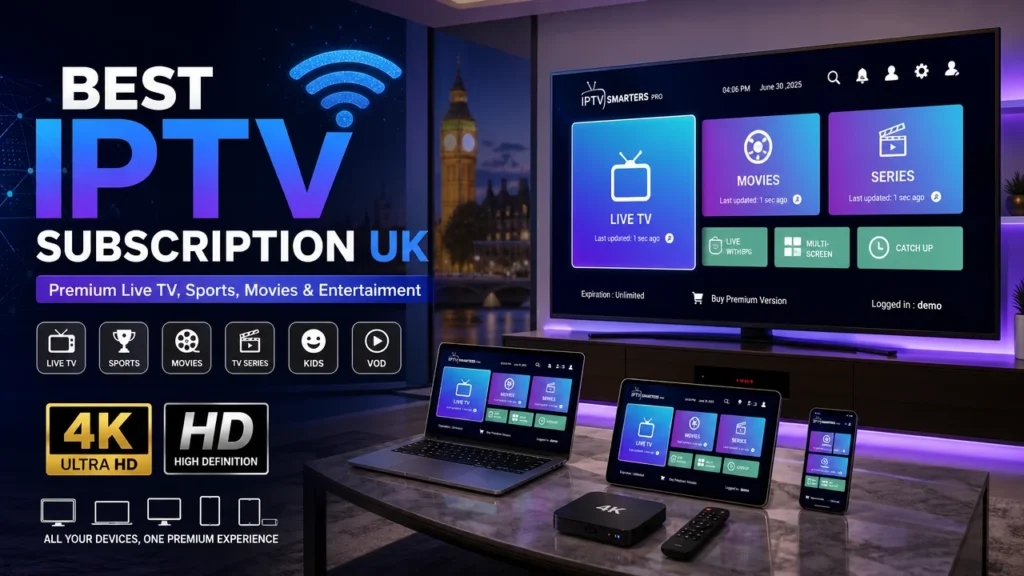
Wondering how does IPTV work on smart TV? Most smart TVs (Samsung, LG, Android TV) support IPTV through dedicated apps like TiviMate, IPTV Smarters, or OTT Navigator. A good provider offers M3U playlist URLs or Xtream Codes API access, which work across all these apps. For Firestick users, sideloading is common—your provider should offer clear setup instructions.
Customer Support & Community
When your stream buffers during a crucial match, you need help fast. Look for providers with active Telegram groups, Discord servers, or 24/7 live chat. A responsive support team is a hallmark of a professional operation. Check iptv review reddit 2025 threads to see what real users say about response times and issue resolution.
Payment Options & Money-Back Guarantee
Reliable services accept cryptocurrencies, PayPal, or credit cards through verified processors. Beware of providers that only accept irreversible methods like gift cards or wire transfers. A 24-72 hour free trial or a 7-day money-back guarantee indicates confidence in their product.
LIMITED TIME AVAILABILITY
Unlock Full how does iptv work Access
Unlock complete high-definition information and priority access packs. Lock in your pricing model today before plans return to standard regional metrics.
3. What You Need to Know About the Current IPTV Market
The IPTV landscape in 2025-2026 is more competitive than ever. Thousands of providers exist, but consolidation is happening. A few major players now control the reseller networks that feed smaller operations. This means you might buy from a "brand" that's actually reselling the same streams as dozens of other sites—just at different prices.
The market has also seen a crackdown on unlicensed services. While IPTV technology itself is perfectly legal, the content delivered through it may not be. Legitimate IPTV services (like Hulu Live TV, YouTube TV, or Sling) pay for content distribution rights. Unlicensed services don't. The difference is critical when asking "is IPTV legal in the US?" — the delivery method is legal; the content licensing determines legality.
Another trend: the rise of dedicated IPTV boxes. Pre-configured Android TV boxes loaded with IPTV apps are popular but often overpriced. You can achieve the same setup with a standard Firestick or smart TV for less money. Understanding how to set up IPTV on Firestick yourself gives you more control and saves markup.
Pricing has also shifted. The era of "$5 per month for 10,000 channels" is fading. Quality providers now charge $10-20/month for reliable service with stable streams, VOD libraries, and proper EPG data. Ultra-budget options exist but come with higher buffering risk and shorter lifespans. If you see a "lifetime" subscription for under $100, treat it with extreme skepticism—server maintenance costs alone make that model unsustainable.
4. Questions to Ask Before Buying an IPTV Subscription
Before you click "buy," ask the provider these questions directly. Their answers reveal everything about their reliability.
1. Do you offer a free trial, and what are the limitations? A 24-hour trial is standard. Some providers restrict HD streams or certain channels during trials. Confirm what's included so you can properly evaluate performance.
2. What protocol do you use for streaming? Most legitimate services use HTTP Live Streaming (HLS) or MPEG-DASH. These are industry standards that work across devices. Avoid services that rely on obscure, proprietary players without explanation.
3. Can I use the subscription on multiple devices simultaneously? Connection limits vary from 1 to 5 concurrent streams. For a family household, you'll need at least 2-3 simultaneous connections. Some services charge extra for multi-room support.
4. What happens if the service goes down? Professional providers have backup servers and redundancy. Ask about their uptime guarantee. Services with 99.9% uptime claims usually offer compensation for extended outages.
5. Is the EPG included, or do I need to provide my own? Some cheap services expect you to configure EPG data manually. This is a red flag—it suggests they don't care about user experience. A proper IPTV service provides a complete, working EPG out of the box.
5. Warning Signs to Spot in IPTV Services
These red flags should make you walk away immediately:
No free trial offered. Any provider that refuses a trial is hiding poor performance. Even a 1-hour trial is better than nothing. If they say "trust us," don't.
Extreme pricing. "$29 for lifetime access" is mathematically impossible to sustain. Server bandwidth, content sourcing, and support staff all cost money. Unrealistically low prices mean the service will either degrade rapidly or disappear entirely.
Only accepts cryptocurrency or unrefundable payments. While many legitimate services accept crypto, if crypto is the only option, you have no recourse if the service fails. Look for PayPal, credit card, or known payment processors that offer buyer protection.
No clear refund policy. Reputable providers have a written refund policy (typically 7-30 days). If the terms and conditions page doesn't exist or is vague, consider it a major risk.
Overpromises on channel count. "50,000 channels" sounds impressive but is often filled with dead links, duplicate entries, or obscure stations you'll never watch. Quality matters more than quantity. A focused list of 5,000 working channels with accurate EPG beats 50,000 broken ones.
6. Comparison Table of Available IPTV Options
| Feature | Budget Service | Mid-Range Service | Premium Service |
|---|---|---|---|
| Monthly Price | $5 - $10 | $10 - $18 | $18 - $25 |
| Channel Count | 5,000 - 10,000 | 8,000 - 15,000 | 10,000 - 20,000+ |
| Video Quality | SD/HD (unreliable) | HD/FHD (stable) | HD/4K (consistent) |
| Buffering Rate | High (peak times) | Low (occasional) | Very Low (rare) |
| EPG Accuracy | Poor / Missing | Good (5-7 days) | Excellent (14 days) |
| Simultaneous Streams | 1 device | 2-3 devices | 3-5 devices |
| VOD Library | Limited | Good (5k+ titles) | Extensive (15k+) |
| Live Sports Focus | Basic coverage | Good (major leagues) | Excellent (all leagues + PPV) |
| Refund Policy | None / Unclear | 7-day guarantee | 14-30 day guarantee |
| Customer Support | Email only / Slow | Live chat + Email | 24/7 Live chat + Telegram |
Table: Price-performance comparison across three IPTV tiers. Premium services offer the most consistent experience for live sports and multi-device households.
7. Recommendation by Budget and Needs
✅ Pros of Premium IPTV
- Reliable streams during live sports events
- Accurate EPG reduces channel-surfing frustration
- Dedicated support when issues arise
- 4K and FHD quality consistently available
- Multi-device support for whole-home use
❌ Cons of Budget IPTV
- Frequent buffering during peak hours
- Channels go offline without notice
- EPG often missing or incorrect
- No refund if service shuts down
- Limited or no customer support
Our recommendation by use case:
For live sports fans: Choose a premium service with dedicated sports servers. The best IPTV service for live sports prioritizes low latency and high bitrate for action without lag. Expect to pay $15-20/month for this category.
For cord-cutters replacing cable: A mid-range service ($10-15/month) with 8,000+ channels, good EPG, and 2-3 simultaneous streams is sufficient. You'll get all major US networks, entertainment channels, and news.
For international content: Many providers specialize in specific regions (Indian, Arabic, Latin American channels). Look for services that highlight their regional lineup. A budget-friendly option often works here if the content is sourced locally and has lower bandwidth demands.
For light users (only a few channels): Consider a budget service with a trial period. If you only watch news and a couple of entertainment channels, a $5-8/month plan may suffice—just have a backup plan in case of service interruptions.
8. How to Maximize Your IPTV Investment
Once you've chosen a provider, these steps will ensure you get the most out of your subscription every day.
Optimize your internet connection. IPTV requires stable bandwidth. For HD streaming, you need at least 25 Mbps. For 4K, aim for 50 Mbps or higher. Use a wired Ethernet connection whenever possible. If using Wi-Fi, ensure your router supports at least Wi-Fi 5 (802.11ac) and place it close to your streaming device. An IPTV buffering fix guide almost always starts with checking your network speed and stability.
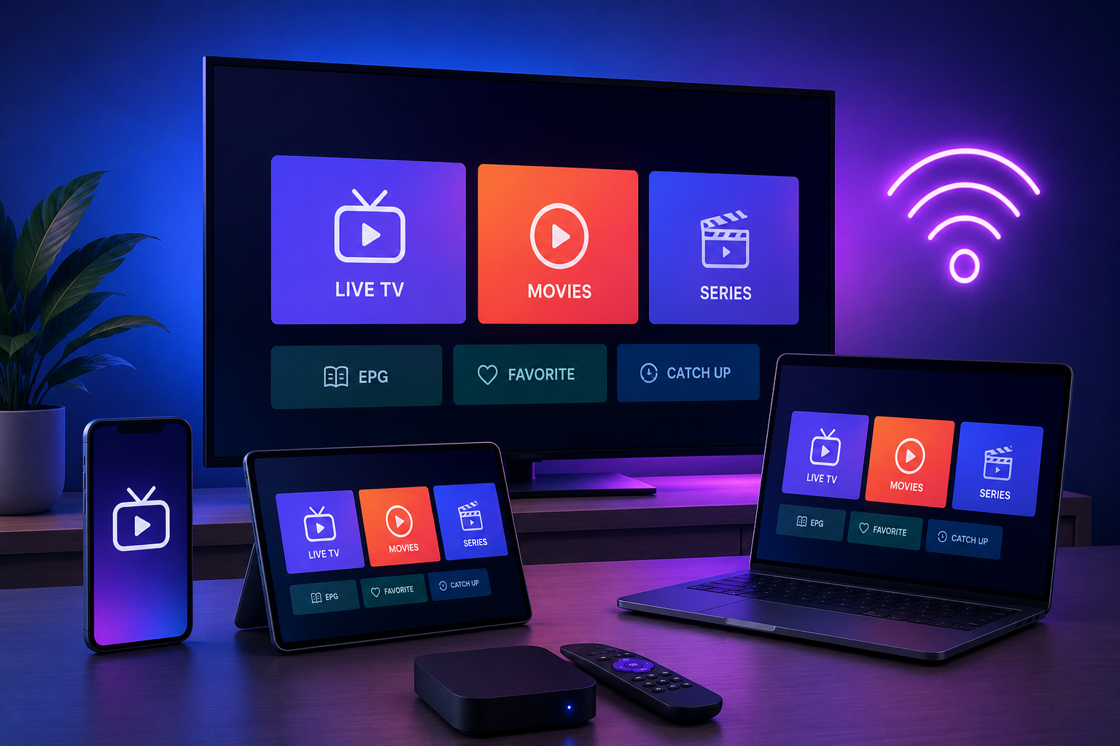
Use the right IPTV player app. The default player that comes with your subscription is often basic. For the best experience on Firestick and Android TV, install TiviMate (paid version is $7/year and worth every penny). It offers a cable-like interface, catch-up TV, and superior EPG integration. On smart TVs, IPTV Smarters Pro is a solid free alternative.
Learn how to set up IPTV on Firestick correctly. The process involves enabling "Apps from Unknown Sources" in settings, installing a downloader app, and using it to sideload your IPTV player. Many providers offer QR codes that automate the process. Bookmark their setup guide—you'll need it if you ever factory reset your device.
Use a VPN for privacy and performance. Some ISPs throttle IPTV traffic, causing buffering. A good VPN hides your streaming activity and can improve speeds by preventing throttling. Choose a VPN with servers optimized for streaming and low latency. This is especially important when considering is IPTV legal in the US — a VPN adds a layer of privacy regardless of the service's licensing status.
Set up a backup subscription. Even the best IPTV services can have unexpected downtime. Having a secondary subscription from a different provider ensures you're never without entertainment. Many users keep one premium plan for primary use and a budget plan as backup. The cost is minimal compared to the frustration of being caught without access during a major event.